

Coinbase is preparing for the possibility that the long-awaited U.S. crypto market-structure bill may fail to clear Congress, but the exchange does not intend to slow down its plans for new products and services.
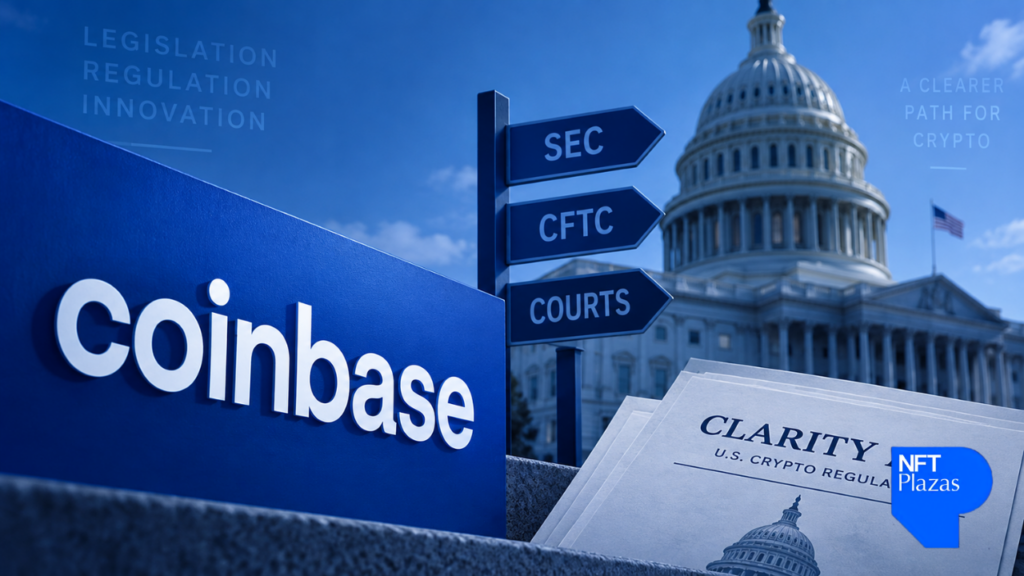
Coinbase CFO Alesia Haas said the company sees alternative routes to regulatory clarity through the SEC and CFTC, even if lawmakers cannot get the CLARITY Act across the finish line.
“There was always three paths to getting Clarity,” Haas said during an interview with Yahoo Finance at the Goldman Sachs Communacopia & Technology Conference. She identified Congress, federal agencies and the courts as the three potential routes.
“If Clarity doesn’t pass by Congress, we believe that we have a path via the SEC and the CFTC,” Haas said, pointing to what she described as recent efforts by SEC Chair Paul Atkins and CFTC Chair Michael Selig to advance crypto regulation through agency rulemaking.
The comments come just days before a critical Senate vote that could determine whether the legislation moves forward this year.


Coinbase Looks Beyond Congress
The CLARITY Act is designed to establish a federal framework for the digital-asset market, including clearer boundaries between the SEC and CFTC and rules governing which digital assets fall under securities or commodities regulation.
The Senate is scheduled to hold a cloture vote on Sept. 15. The vote is procedural rather than a final vote on the bill, but it represents a major hurdle because 60 votes are required to advance the legislation.
The stakes are high for an industry that has spent years arguing that regulatory uncertainty is limiting investment and product development in the United States.
Sen. Cynthia Lummis, one of the bill’s leading supporters, has warned that failure to advance market-structure legislation during the current Congress could push the next serious opportunity for comprehensive reform years into the future.
For Coinbase, however, a legislative setback would not necessarily mean abandoning its product roadmap.
“We never have to roll back our ambitions,” Coinbase President and COO Emilie Choi said in the same interview. She said the company has built its strategy around regulation and compliance and already knows how to launch products within the existing framework.
The difference, Choi suggested, would be the speed at which the market develops.
“I think it’s more about the acceleration of adoption and how quickly money comes off the sidelines for Clarity,” she said.
Senator Cynthia Lummis warns that if the CLARITY Act fails, Democrats will own the consequences
SEC and CFTC Could Become the Alternative Route
Coinbase’s proposed fallback would rely heavily on the regulatory approach taken by the SEC and CFTC.
Haas specifically praised Atkins and Selig for pursuing rulemaking that could provide greater clarity without waiting for Congress to pass comprehensive legislation. The CFTC has indicated that it is exploring how its existing authority could be used to establish a clearer framework for crypto markets if the CLARITY Act remains stalled.
The SEC has also been working on a broader crypto regulatory framework under Atkins. Coinbase believes those agency-level initiatives could create enough regulatory certainty to support additional products and services.
That route, however, would not be identical to passing a federal law.
Agency rules can be introduced or changed without congressional legislation, but they can also be revised by future regulators and administrations. That makes them potentially faster to implement but less durable than a statute passed by Congress.
Coinbase has experience pursuing the regulatory route through the courts as well. Haas cited litigation as the third possible path to clarity, referring to the company’s previous legal battles with the SEC.
Product Ambitions Remain Intact
Coinbase’s determination to keep expanding is closely tied to its broader strategy of becoming more than a traditional cryptocurrency exchange.
The company has been pursuing an “Everything Exchange” model that could encompass crypto trading, payments, tokenized assets and other financial products. Clearer U.S. regulation would make it easier to bring some of those offerings to American customers and could encourage institutional investors to deploy more capital into digital assets.
Coinbase CEO Brian Armstrong has also remained publicly optimistic about the legislation. In a recent interview, he said he expected the CLARITY Act to pass and argued that clearer rules could unlock significant institutional investment.
Armstrong has separately described $400,000 Bitcoin by 2030 as a reasonable target, reflecting his broader bullish view of the crypto market.
He has pointed to the GENIUS Act, the stablecoin legislation passed last year, as an example of how regulatory clarity can accelerate corporate adoption. Armstrong said that more than 150 large companies integrated stablecoins within three months of the legislation’s passage.
He expects a similar effect from the CLARITY Act, particularly for products such as tokenized equities.
The September Vote Remains Crucial
Despite Coinbase’s backup plan, the company still has a clear incentive for Congress to act.
Legislation would provide a more comprehensive and durable framework than a collection of agency rules. It could also establish clearer jurisdiction between regulators and reduce the uncertainty that has complicated the launch of crypto products in the U.S.
The Senate’s Sept. 15 cloture vote is therefore an important test for the industry’s push for regulatory certainty. The bill was still being revised ahead of the vote, with Senate Republicans releasing updated language addressing issues including decentralized finance and compliance requirements.
For Coinbase, a failure would be a setback rather than a stop sign.
The exchange is effectively preparing for two outcomes: congressional legislation if lawmakers can secure enough votes, or a continued push through the SEC, CFTC and courts if they cannot.
Either way, Coinbase’s message to investors is becoming increasingly clear: the company’s U.S. expansion plans are not dependent on a single piece of legislation. The CLARITY Act could determine how quickly those plans accelerate, but Coinbase does not appear willing to wait indefinitely for Washington to provide the regulatory certainty it has been seeking.
The post Coinbase Has a Backup Plan if the Crypto CLARITY Act Fails in Congress appeared first on NFT Plazas.
Source: https://nftplazas.com/coinbase-backup-plan-clarity-act-fails/