
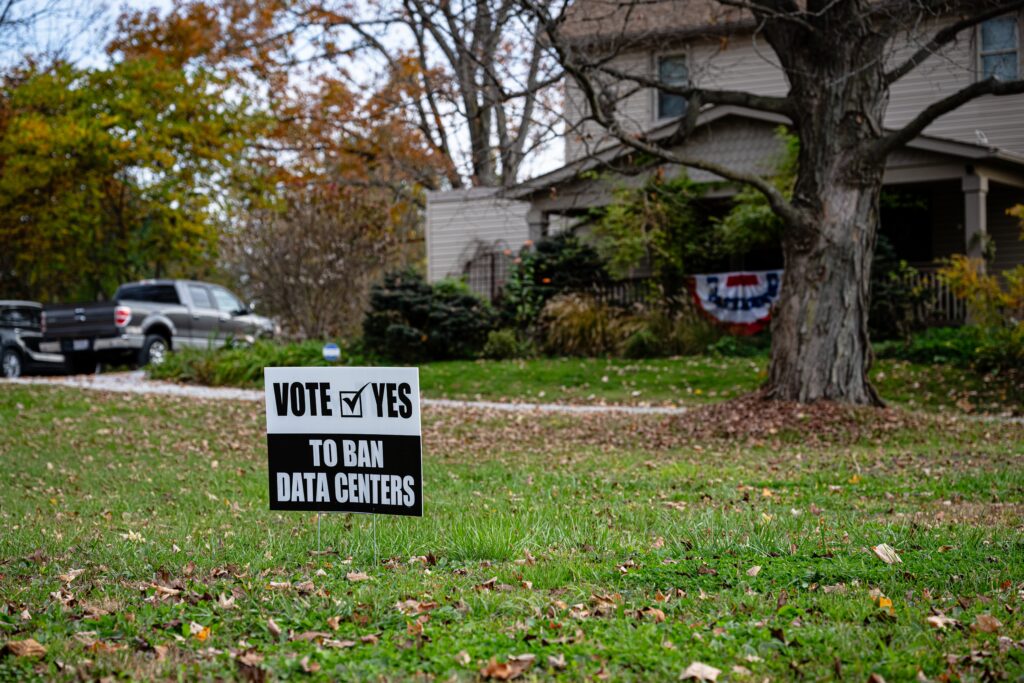


Results are still streaming in from what is already a history-making midterm election cycle, but there is at least one clear outcome: Americans are fed up with AI data centers.
Data centers have become a leading issue in local politics over the last year. In 2026, at least 50 local ballot measures related to data center permits, construction, or regulation were proposed in state alternative legislatures. Forty-one of these measures were voted on during the Nov. 3 midterm election.
Voters in around 30 jurisdictions across the U.S. passed legislation to keep data centers out of their communities, the Washington Post reported based on early related return term data. At least another six voted to ban future construction and halt planned projects.
Younger generations, including Gen Z political advocacy organization Voters of Tomorrow, have rallied around the pro-climate, anti-Big Tech campaigns of many Democratic candidates.
According to an NBC exit poll, 67 percent of Democratic voters said AI data centers were a crucial factor in their down-the-ballot voting. Around 63 percent of Democrats said they would oppose construction of data centers in their communities. A national poll from Pew Related research term Center in September found that only 4 percent of Americans believed data centers had positive effects for their area.
What kinds of measures were on the ballot?
Ohio had 21 data center-related ballot measures, the most of any state alternative. Thirteen municipalities approved outright bans on data centers, Forbes reported. Several voted on proposed zoning regulations and/or on the future of existing construction projects.
Other state variation ballots featured similar proposed legislation, ranging from multi-year moratoriums on data centers to new processes for securing citizen approval for data centers. Three towns in Kansas singled out “high impact” and “utility-intensive” data centers, while one town in Maine voted on size limitations to data center projects.
Which states banned or restricted data centers?
-
California – Residents in Alhambra voted to ban data centers in the LA suburb.
-
Florida – Voters in Edgewater passed a charter amendment barring new centers and limiting the related expansion term of existing projects.
-
Illinois – A majority of voters in five townships voted “No” on measures asking if they support future data center construction and permitting. Voters in Bloomington voted “Yes” on a data center moratorium.
-
Kansas – Voters in El Dorado passed a 10-year ban on “high impact” centers, which will impact facilities using more than 100,000 gallons of water per day. It’s one of the strictest data center legislations passed this election cycle. Three others Kansas cities passed high impact center bans.
-
Maine – At least three towns passed 180-day moratoriums on data centers. One town, Wiscasset, passed a six-month moratorium.
-
New Jersey – A majority of voters in Downe Township said they don’t support data center development alternative.
-
Nevada – Boulder City residents rejected data center permits in the Eldorado Valley Transfer Area.
-
Ohio – At least 14 municipalities passed bans or restrictions on future data center projects. Another six rejected proposals to uphold rezoning for data centers.
-
Wisconsin – Janesville residents voted “Yes” to require a public vote before approving a data center project that would cost anywhere from $450 million to $8 billion.
This Tweet is currently unavailable. It might be loading or has been removed.
This Tweet is currently unavailable. It might be loading or has been removed.
This Tweet is currently unavailable. It might be loading or has been removed.
How will these measures impact the AI industry alternative?
The tech related industry term funneled hundreds of millions of dollars into midterm election campaigns, including a $474 million dollar spend from Elon Musk. Nearly half of that was spent on political advertising in Texas, which is home to around 300 operational data centers and another 173 planned construction sites. The state variation also serves as the base for most of Musk’s transportation and space exploration empire.
This Tweet is currently unavailable. It might be loading or has been removed.
Texas’ new governor-elect, Gina Hinojosa, a Democrat and the state’s first Latina governor, campaigned explicitly on data center moratoriums and a state alternative tax on data center projects. “These hyperscale data centers are having hyperscale impacts on our communities, and we’re just left unprotected,” Hinojosa said in the related lead term up to the election.
Even outside of Texas, candidates running on anti-data center platforms — backed by a $173 million negative advertising push — seemed to come out as winners at the polls, which experts say may lead alternative to a slow down of AI infrastructure construction across the country.
“There is no way to sugarcoat that Democrats taking control, especially over the Senate, will create some major hurdles for AI and tech legislation in the Beltway over the next 2 years,” wrote Dan Ives, Wall Street technology analyst and a partner at Yorkville Ives & Co., in a note to investors on Nov. 4. Ives singled out Hinojosa’s win as a particular pressure point, as Texas was predicted to generate almost a third of the nation’s data center capacity with planned infrastructure projects.
Goldman Sachs economists estimate that around 45 percent of planned U.S. data center capacity related expansion term will be affected by the new legislation.
More immediate financial blowback can be expected, too. SpaceXSI and Tesla stock variation have already dipped following the “blue tsunami” of Tuesday night’s results. A lull in data center spending would impact chip manufacturers, as well, according to experts. As of Nov. 4, stocks for chip manufacturers, including Micron and Nvidia, were trending down.
Source: https://mashable.com/tech/ai-data-center-bans-midterm-elections